
Why the First Plumber to Answer Wins 78% of the Time (and How to Be First)
The data on speed-to-lead is brutal: 78% of customers buy from whoever answers first. Here's what the research says — and how to win the race.
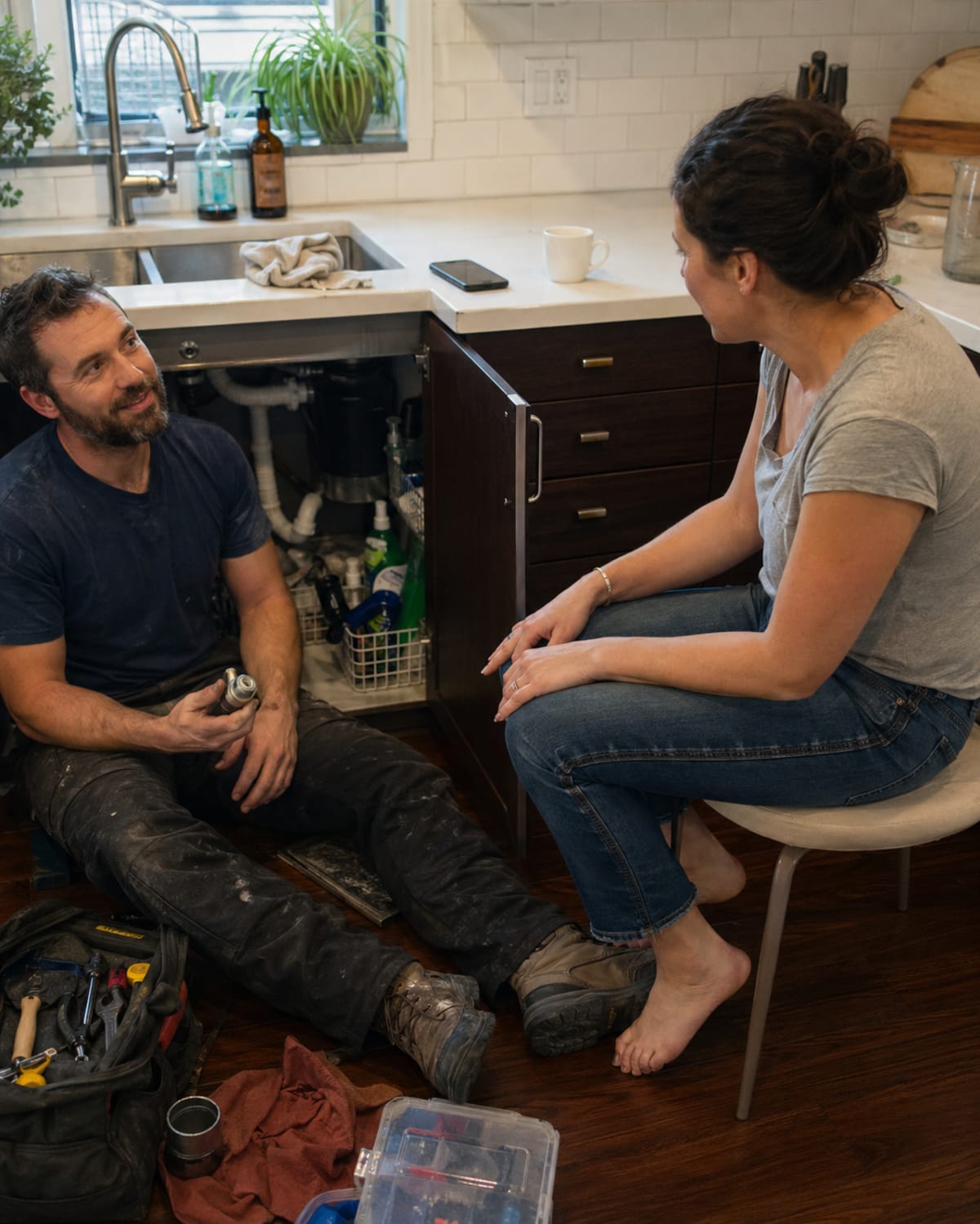
There's a homeowner standing in their kitchen at 9:47 PM with water pooling around their feet.
The dishwasher cracked a supply line. They've already shut off the valve, but the cabinet is soaked, the floor is soaked, and they're calling a plumber. They open Google, type "emergency plumber near me," and start dialing the top three results.
Plumber number one rings four times and goes to voicemail. They hang up.
Plumber number two answers in two seconds: "Hi, this is Tom's Plumbing — what's the emergency?"
The third call never happens.
This is what speed-to-lead looks like in plumbing. And the research on it is some of the most consistent data in business: the first business to answer wins the job at a rate that has nothing to do with quality, pricing, or reputation.
The 78% rule
Across multiple lead-response studies stretching back more than a decade, one number keeps showing up: 78% of customers buy from the first business that responds to them.
That's not first to show up. Not first with the best quote. Not first with the most reviews. First to respond.
For a homeowner in a real plumbing emergency — burst pipe, no hot water, sewage backup — that number is almost certainly higher. They're not comparison shopping. They're triaging a crisis. The first plumber to say "yes, I can help" gets the job, and everyone else loses.
What the research actually says
The most-cited speed-to-lead study comes from a 2011 Harvard Business Review paper by James Oldroyd, Kristina McElheran, and David Elkington. They analyzed roughly 15,000 leads and over 100,000 call attempts across multiple industries. The findings became the foundation of what's now called the "five-minute rule":
- Businesses that contact a lead within 5 minutes are roughly 100 times more likely to connect than businesses that wait 30 minutes.
- Those same fast-responders are 21 times more likely to qualify the lead into a real opportunity.
- The odds drop steeply between minute 5 and minute 10 — that single 5-minute window is where most of the leverage lives.
A separate study by Velocify found that responding within one minute can increase conversion rates by nearly 400%. And a Drift analysis of real-world business behavior found something almost embarrassing: while the data says you should respond in under 5 minutes, the average business actually takes 47 hours to respond to a lead.
For plumbing, where calls are mostly inbound voice rather than form-fill, the 47-hour gap doesn't apply directly. But the underlying lesson does. Most plumbing businesses respond by missing the call entirely and either calling back hours later — or never. By the time they call back, the homeowner has already booked the next plumber on the list.
Why plumbing is the worst-case scenario for slow response
Speed-to-lead matters in every industry. It matters more in plumbing than almost any other one.
Three reasons:
1. The "first call" advantage is doubled when there's water on the floor.
A homeowner with a flooded basement isn't comparing three estimates. They're calling whoever picks up. If you're plumber number two on their Google list, you don't get a chance to compete on price or reputation — you just don't exist.
2. Plumbing emergencies are time-of-day inverted.
Most B2B sales leads come in during business hours. Plumbing emergencies don't. Burst pipes happen at 11 PM. Water heaters fail Saturday morning. Sewage backups hit Sunday during dinner. The standard solution — "we'll have someone follow up tomorrow" — fails completely. The lifecycle of a plumbing emergency is measured in minutes, not days.
3. The replacement cost is built into the call.
Most plumbing emergencies have a standard fix. Burst supply line: $200-$800. Failed water heater: $1,500-$3,500. The homeowner doesn't need a quote — they need a plumber. The "qualifying" step that takes weeks in B2B happens in the first 30 seconds of the call. Whoever's on the line wins.
If you're already losing the speed race, it's not because your business isn't good. It's because the structure of your day makes it impossible to be first when the phone rings while you're under a sink.
What "first" actually means
A lot of plumbers read research like this and think: I just need to answer faster.
The research is more specific than that. Here's what actually wins the 78%:
| Response time | Outcome |
|---|---|
| Under 30 seconds | Customer hasn't even finished assessing whether to keep dialing. You win. |
| 30 seconds to 2 minutes | Customer is mid-decision, weighing whether to call the next plumber. You usually win. |
| 2 to 5 minutes | Customer has already started dialing the next number. You're in a coin flip. |
| 5 to 30 minutes | Customer has booked someone else. You've lost the job. |
| Over 30 minutes | The leak is half-fixed. You're hearing about it for damage estimates only. |
A human plumber, even a fast one, cannot consistently hit "under 30 seconds" while doing actual plumbing work. You can't be under a sink and on a phone at the same time. This is not a willpower problem — it's a physics problem.
The plumbers who win the 78% have outsourced the first response to a system that doesn't care whether their hands are full.
The four ways to win the speed race
Same four options we covered in the missed-call cost breakdown, now ranked specifically by speed-to-first-response:
Voicemail with callback — response time is whenever you next check your phone, often 30 minutes to several hours. By any speed-to-lead measure, you've lost the job before you call back.
Missed-call text-back — automatic SMS in roughly 5 to 15 seconds. Better than voicemail, but the homeowner is still the one who has to wait. Emergency callers won't.
Human answering service — typical answer in 10 to 30 seconds during covered hours. Fast enough to win most speed races. The catch is cost: $300-$600/month with per-minute charges that scale with call volume, and after-hours coverage usually costs extra.
AI receptionist — answers in under 2 seconds, every time, 24/7. No "covered hours." No per-minute scaling. Modern systems sound natural enough that most callers don't realize they're not talking to a human. Pricing is flat ($29-$200/month depending on volume), so a 2 AM emergency costs the same as a Tuesday morning routine call.
For a solo plumber competing against shops with full-time office staff, the AI option is the only one where the math actually works. You can't afford a human receptionist on a one-truck budget, and any solution that adds latency loses you the speed race anyway.
How to test your own response time this week
Don't take anyone's word for it — including this article's. Test your own setup.
- Have a friend call your business line at three random times this week — once during work hours, once at 8 PM on a weekday, once on Saturday morning. Don't tell them what you're testing.
- Have them time how long it takes to either reach you or reach a system that captures their problem. Stopwatch from when they hit dial to when they're heard.
- Compare the three times. If any of them are over 30 seconds, that's the call you would have lost to a competitor.
- Now imagine the same test, but it's a real homeowner with water on the floor. They're not waiting through a long voicemail prompt. They're hanging up at the second ring.
Most plumbers who run this test discover their actual response time is much worse than they think. The work day is full of moments when you simply can't get to the phone — and every one of those moments is a customer dialing your competitor.
The cheapest fix is the one that's already running
The simplest answer to the speed-to-lead problem isn't to work harder or hire faster. It's to make sure something — anything — picks up the phone in under two seconds, every single time, regardless of what you're doing.
That's the entire job. Not perfect call handling. Not closing the sale. Just answering.
Once a homeowner is talking — to a human, an AI, or a really fast robot — they're 78% likely to stop calling other plumbers. That's the whole game. Speed buys you the conversation, and the conversation buys you the job.
If you want to hear what a sub-two-second answer actually sounds like, dial (947) 221-1601. That's our demo line, answering as a fictional plumbing company called McKinney Elite. Tell it about a burst pipe, a leaking water heater, anything you'd hear on a real call. Time how fast it picks up. Compare it to your own line.
The number you get back is the answer to whether you're winning the 78% — or losing it.
HiRiley is a 24/7 AI receptionist built for plumbers and other local service businesses, starting at $29/month with a free trial that doesn't require a credit card. Speed-to-lead matters. Be first.
Try Riley
Stop missing calls.
10 free calls. No credit card. Live in under five minutes.
Keep reading
The First 90 Seconds of a Water Damage Call: What Restoration Companies Need to Capture Fast
Water damage callers are panicking as they dial — and the next 90 seconds decides whether…
Storm Damage Calls Don't Wait: How Roofers Capture Leak and Hail Leads Before the Next Contractor
Roofers miss 50-70% of calls during post-storm surges, when 48 hours decides 6 months of …

How Real Estate Agents Lose Buyer Leads in the First 90 Seconds (and How to Be the One Who Doesn't)
NAR data shows 78% of homebuyers work with the first agent who responds to their inquiry.…